An Amateur’s Guide to Noveling

About This Guide
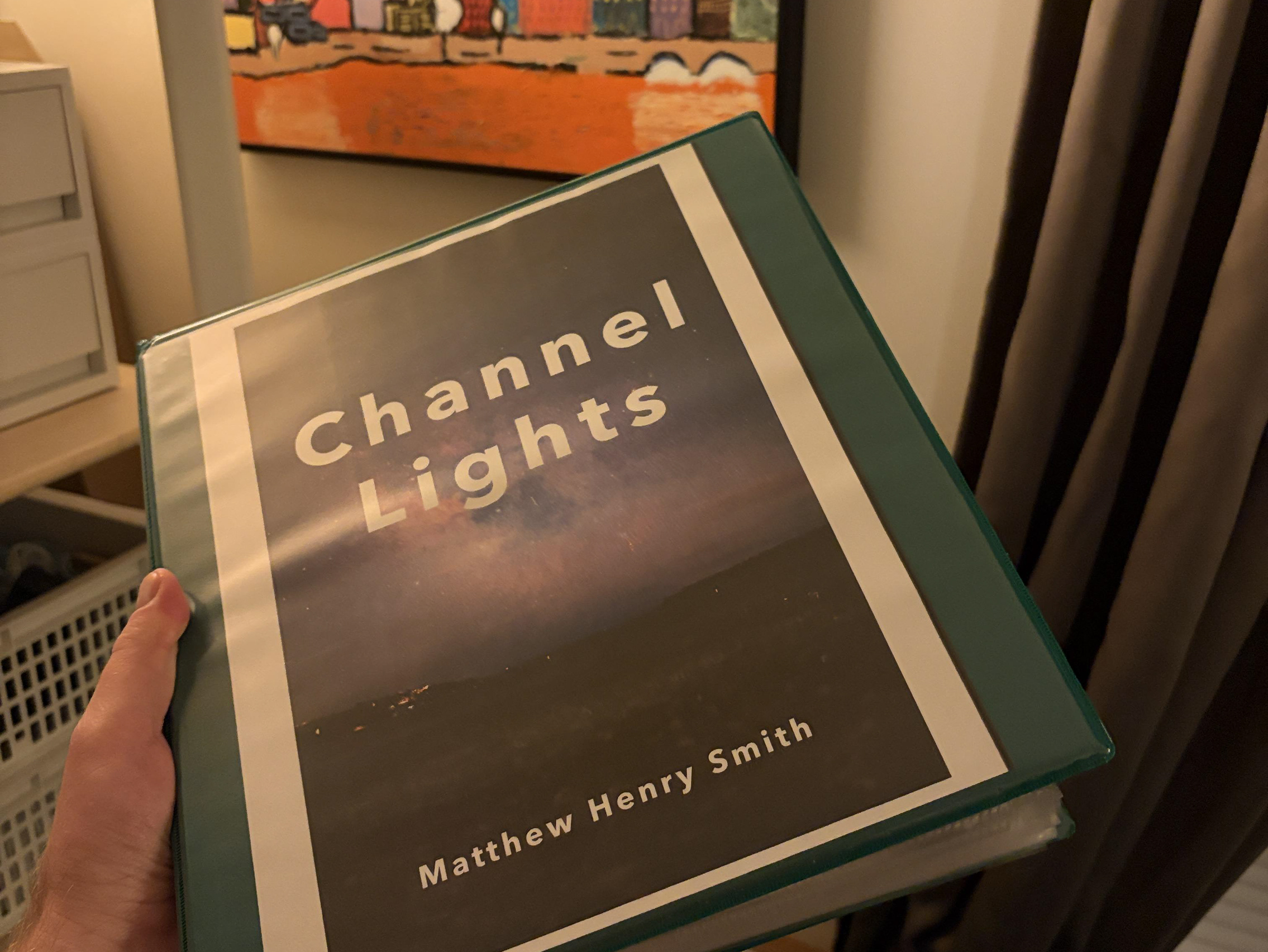
This guide is a glimpse into my experience writing a novel for the first time. 
Over roughly one year, I achieved my goals of: 
1. Completing the manuscript
2. Selling over a hundred copies
3. Unlocking modest physical distribution
4. Learning about myself
5. Having a lot of fun
If these goals align reasonably with yours, this may help you build your own project plan for publishing. This guide is not provided as legal guidance or financial advice. 

Getting Started
I began writing Channel Lights without any substantial concept of the story. 
It was 2025. My favorite television shows weren’t resonating with me anymore. Artificial intelligence was being pitched as a solution to the “inefficiency” of creativity. Yet the things whose very purpose was to instantly satisfy could no longer do so. 
So I began reading books again, an activity that necessarily takes time, patience, and delayed gratification. My attention span wasn’t attuned to it at first, but it gradually improved as I started turning pages and those pages became chapters.
Some stories, like The Wedding People and The Sea of Tranquility, gripped me in ways I’d forgotten books could. Others less so. Between these extremes, I started to see the faint outline of a question: Could I write something at least as good as the worst book in the bookstore? Perhaps I couldn’t write a celebrated bestseller but…
So I made a commitment to myself to write for fun. And I’d use the attention span I’d regained from reading to attempt a long-form project to craft a chapter book of my own. 
I had the will and the focus; all I needed was the story. 

Developing the Story 
In the mornings and evenings, when I’d previously opened my computer to escape into streaming, I began to escape into my own mind. Just as I had rebuilt my attention span, I also began to rebuild my imagination. 
This was a meditative process that started quietly, uncertainly, as I closed my eyes and asked myself what I wanted. Where would I go…if I could go anywhere...if I wanted to really feel something...if I was looking for adventure around every corner?
Block Island. I had been lucky enough to go there many times as a child with my family. And since I have an almost photographic topographical memory, it's very easy for me to visualize places I have been in great detail. Block Island was no exception. 
As I would eventually write in Channel Lights:
Block Island, shaped like a half-empty teardrop, is a secluded resort town off the coast of the smallest state in the Union, one last stop in the sea before the vast expanse of the Atlantic truly begins. Not dissimilar to Nantucket or Cape Cod—though somewhat more remote—it is a cherished warm-weather playground for New Englanders. Out there, hydrangeas and honeysuckle fill the air with color and sweetness. Country roads twist back on themselves. Calamari sizzles. Families forget what they’ve left behind on the mainland. It is truly the home of summer.
But what kind of adventure should happen there? 

A Very Personal Connection
Around the same time in my childhood that I’d go over to the island, I also loved adventure and mystery stories like The Goonies, Atlantis, MacGyver, and Murder She Wrote. But something was always missing that prevented me from fully connecting with these stories. To the degree they featured a romance storyline, I always found them inaccessible for reasons I’d later learn had to do with my sexual orientation. 
Could I create my own mysterious adventure story that centers queer love? 
I began to dive into my memories to write down what it had been like, and gave myself permission to make changes like creating a hotel on the island where a murder might take place and characters who might have a reason for being there. I set the stage, invited the players, and began mentally simulating how they could become meaningful to each other. 
I was creating a world where unbelievable things could happen. The points of entry into that world were my experiences on the island and ever since. I like to think about it like the titular wardrobe in C.S. Lewis’ The Lion, the Witch and the Wardrobe. The wardrobe is something from the real world that acts as a portal to the fantastical world, and is itself a part of that fantastical world tucked within its snowy, magical pine trees. 
Facing my fear of flying with my husband in a little red Cessna on Cape Cod could be the wardrobe into the main character’s experience facing the same fears (and so much more) with his love interest on Block Island. My knowledge of photography could be a wardrobe into the mystery itself, where images capture more than they appear to and send the characters scrambling for buried treasure. 
I could enter the stage I had created through these wardrobes and set it for a story I’d wanted to see all my life. 
By this point, I had momentum and began writing everything down, even if it was out of sequence or didn’t make sense. I kept digital and physical notepads available at all times to jot down ideas, and would spend several hours each day refining and organizing the fragments. 
As the chapters came together, I even started to notice I had my own style: it moves quickly, with a tangible sense of place that reads almost like a script with stage directions. 

Versions 
While the first edition came together, I started telling people what I was doing and how much fun I was having. Family and friends were very encouraging, and some generously offered to read drafts. 
Finishing my first draft came with a huge sense of accomplishment and a false sense of completion, the latter of which faded quickly. I soon realized there was so much more I wanted to add to the book! 
I started to make a project plan for the steps I wanted to take along the way, including which friends and family members I wanted to read which version. I knew I didn’t want to ask the same people to read each draft because it may be difficult to parse all of the fine differences with the major ones. The book ultimately had four main drafts, and I had four distinct pre-reading cohorts. 
With each cohort I clearly outlined the kind of feedback I was looking for, asking them two main questions: 
1. Are you having fun?
2. Does it make sense? 
Since I liked creating the “puzzle” of my mystery, I didn’t want suggestions for improvement, but I did want to know where things weren’t working so I could improve them. I also wanted to know if the book was fun and kept their attention. 
My first readers were happy to do so, and gave me great critiques to work with. For example, they told me I had too many characters, which led me to combining, deleting, and anonymizing various characters. 
In retrospect, I realize I had had an unhelpful habit that carried me through my first draft: Every time I sat down to write, I would start from the beginning and read everything I had written so far, make edits, and add more to the end. This gave me a sense of momentum, but it also meant that the first draft of the first half of my book was in great shape while the second half was rushed. Note to self: The next time I write a book, I will stick with reading only the preceding chapter when I am ready to write a new one.  
I also should have taken more breaks in between drafts. Often, by the time I got feedback from a cohort, I'd already started making serious changes. Putting the manuscript down for a while and letting it marinate is better than relentlessly editing from the top down. 

To Bare is Human
Regarding artificial intelligence, I want to be very clear that I wrote this book to express something. AI cannot express anything because ideas have no meaning to machines, only statistical significance. 
No part of this book—not the text, the editing, or the cover illustrations—was artificially generated by language or design models. I never prompted a model to “write me a romantic mystery set in Rhode Island” or “make this scene even steamier” because the responses would have been meaningless thereby making the book meaningless, too. 
That said, even works of fiction require some amount of research, and search engines are now powered by AI. So when a writer asks a search engine “what year did XX hurricane happen” or “what books explore themes of found family,” I think we’d be setting an impossibly high literary standard to exclude such queries from their creative process. 
That would be like saying a photographer didn’t really take a picture because their camera used AI to set the right distance to autofocus the lens. There’s a clear difference between getting your focus right and asking Adobe to generate you a brand new image.
Some people are firmly anti-AI, and understandably so. But artificial intelligence is a term for a broad set of technologies that use data and predictions to guess a best result, and different versions of AI had been embedded in the tech we use every day long before Claude first appeared. We need to be able to differentiate between the applications of AI and how they are used. 
As long as these tools are not generating or editing the work, we should be able to say that work is the result of genuine human intelligence.
In short, although AI is now an inevitable part of using what were formerly search engines and an arguably helpful tool for indexing information, it is insufficient.

Setting Goals
Throughout the processes of drafting and sharing versions of my manuscript, I considered what might be next. From my vantage point, there appeared to be three options: 
1. Treat this as a successful learning exercise but shelve the book and perhaps write something totally different to continue honing my craft
2. Independently publish the book with online self-publishing tools
3. Traditionally publish the book through an agent and established publishing house
Option 1 didn’t seem quite right. I really loved the story, wanted more people to read it, and thought there was more to learn from somehow bringing it to the literary marketplace. 
So I began to research options 2 and 3, and developed these lists of pros and cons for each method. 

Traditional Publishing 
Pro: Can be helpful with physical distribution and usually has the industry connections to get a book into the hands of more readers 
Pro: Typically owns or supports the process of readying a book for the market, complete with editing, cover design and marketing
Pro: Can help to legitimize a story in the eyes of readers and may provide a feeling of satisfaction of being chosen by tastemakers
Con: This process can be very slow, taking years or in some cases not working out at all. It usually begins with getting representation by an agent, which itself can also be time-consuming. 
Con: While traditional publishers can help with marketing, they may expect a more consistent schedule of marketing engagement (events, signings, posts, etc.). 
Con: Traditional publishers often have the final say over copy, marketing strategy, and other aspects of the product. 

Independent Publishing 
Pro: The freedom for the author to have final say over the copy and go-to-market strategy. 
Pro: The ability to move as quickly (or slowly) as the author would like. 
Pro: The flexibility to devote as much or as little time to the project as the author would like. 
Con: Some will see this as the less “respectable” path. Several people told me to only view self publishing as a last resort. 
Con: The author will need to cover the costs associated with editing, creating the cover, and going to market. 
Con: The author may have a much smaller reach and struggle to gain physical distribution. 
Regardless of which method I chose, I knew I wanted my manuscript to be in the best shape possible. Even if I pursued an agent’s representation, I wanted to use a visual to help sell the story. So I sought the services of both an editor and a cover illustrator.

Finding a Trusted Editor
I realized I was hitting a point of diminishing returns with my personal drafting and editing process and wanted help from an outside professional. Although I had initially decided to try getting an agent and traditionally publish, I knew an editor could help me prepare for it while readying my manuscript in the event I ultimately self-published. 
My partner connected me with his friend Steph Kantorski, an experienced book editor and communications consultant who had a personal interest in crime and mystery stories. Steph and I had several conversations about my goals and the different kinds of editing a book can undergo, such as line editing, editing for sonority, and structural editing. I chose line editing with a focus on sonority to help with the sound of the words and sentences, and was thrilled with the results. 
We went through several rounds of edits, and Steph even helped me craft my query letter for prospective agents, as well as the other elements of the final product such as the acknowledgements page, the copyright page, and the blurb for the back of the book. I asked Steph for her thoughts for writers who are considering edits for their book. Here were her thoughts:
A good book editor is like the ideal ballroom dance partner: They learn your rhythm, follow your lead, and pick up on subtle cues to match your every move. Most importantly, they try never to step on your toes! 
You want an editor who fully embraces your unique style, yet is annoyingly persnickety. They should have a deep technical knowledge of language and be able (and willing) to explain every edit—yet never get offended if you turn down a suggestion. Their ultimate goal should be to make your work look and sound its absolute best in your image, not theirs. Make sure they have experience handling large documents, are super organized, ask questions and give you regular updates. You’d be surprised how much havoc two people can wreak when they begin trading edits, comments and revisions in a 85,725-word document.
Words to the wise: Software, LLMs and AI bots are incapable of grasping context, culture, meaning and emotion. They’re not even that great at grammar and syntax, for that matter, especially when you’ve honed a singular style. Even if you’ve written a book without AI, only a human editor can truly ensure it resonates with other humans.
Depending on what you think your book needs, choose (or mix and match) an editing tier from these four generally accepted industry standards:
Developmental Editing: Structure
Story arc, plot and characters: This is the heaviest lifting for an editor, but remember: They are not your co-author, and the final choice is yours. A developmental edit is basically an existential inspection of your manuscript.
Line Editing: Style
Register, sonority and sentence structure: This is mostly about overall continuity and how sentences and words sound in the reader’s head. As an (exaggerated) example, if one of your characters suddenly switches from an upper-crust affect to cursing like a drunken sailor, your editor should whip out a red flag.
Copy Editing: Consistency
Grammar, formatting and fact-checking: Get it right, every time. This is about writing your protagonist’s company name on page 356 exactly how it was written on page 45. Much more than cosmetic and technical, it shows you care enough to create a cohesive whole that respects the reader’s sensitivities and sensibilities.
Proofreading: Final Check
Dot all the i’s and cross all the t’s: Proofing is about catching every last typo, not just yours but any errors that may have been introduced during the editing process. While a publishing house usually does this print-ready step in-house, it’s essential to have it done professionally before self-publishing.

Finding a Trusted Illustrator
My friend Ren is an illustrator who has worked on several personal projects for me, including an illustration of my husband and I as groundhogs to commemorate our Groundhog Day wedding. So I knew Ren had the skills and patience to work with me. To help them get started with clear expectations, I wrote a multi-page request for proposal that included examples of book covers I thought were compelling, a summary of the story that highlighted key symbols, and the text I wanted to be featured.
The RFP also included my intentions to use the resulting graphic in merchandising and advertising. 
I broke the RFP into two separate deliverables: Front Cover, and Spine and Rear Cover. Since I was planning to seek the representation of an agent, I thought a front cover design would help my pitch. If I ultimately decided to independently publish, then we would proceed with the design of the spine (which would ultimately be determined by the page count) and the back cover. 
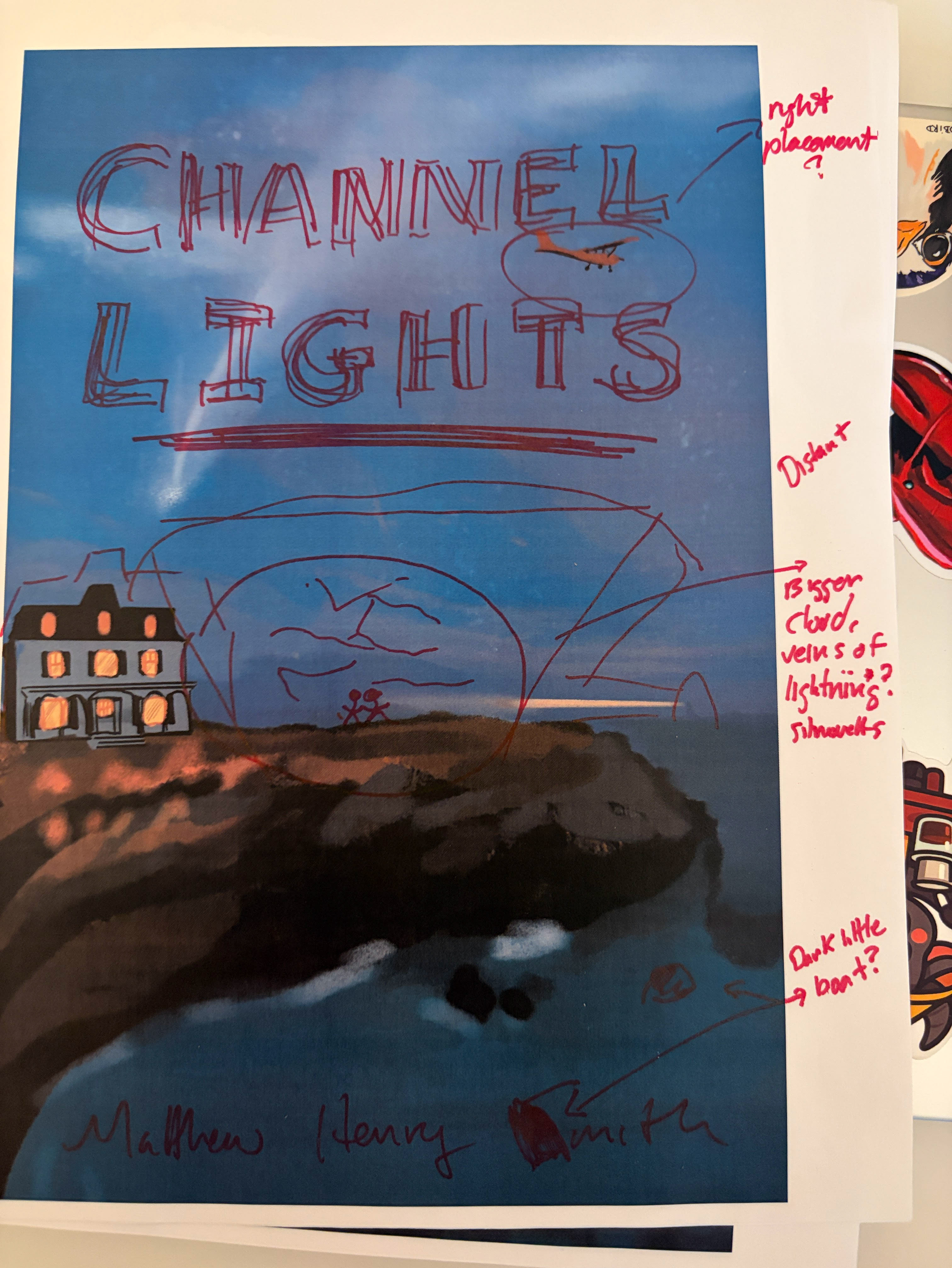
The process went amazingly well. Ren showed me iterative improvements to the designs week after week, seeking guidance on areas of improvement. Each time I was fairly sure we were basically done, but Ren is a true professional who insisted certain aspects needed additional refinement. I couldn’t be happier with the process or results, and asked Ren for their thoughts on what could help a prospective writer looking to work with an illustrator. Here are their notes: 
First and foremost, don’t skimp on the cover! Your cover design is the main reason a reader will pick up your book, so carefully consider who you hire. 
Do not use AI! Your book is your pride and joy and should budget for hiring even a starving college artist! Follow artists on social media, don’t be shy to ask their commission rates. 
Good work costs good money; make sure you hire someone who maps out deadlines, expectations, edit costs, etc. Have some kind of written contract/agreement to protect both author and artist. Map out references with your artist: if you can provide mock-ups, images, Pinterest boards, or anything of the like, that will help your artist see your vision and cut down on the amount of edits or back-and-forth that can occur. 
Lastly, have fun collaborating with someone who is just as excited about your book as you. A cover illustration is a great reference for portfolios and future jobs for an artist. Your designer/artist wants to help make something people want to pick up and enjoy!

Betting on Independence  
As I worked with Steph on further revisions and Ren on the cover, I began querying agents. I used several tools for this including: 
My query letter usually included details about the book, a vision for the target reader, and  comparable works to demonstrate familiarity with the genres. I also included Ren’s cover designs to help agents visualize the book. 
Agents are remarkably, perhaps unbelievably, specific. As an example, I recall coming across an agent who was only looking for non-violent murder mysteries. If the violence happens off-stage, does that still count as violence? These paralyzingly precise wish lists were likely reflectively of the kinds of manuscripts agents had previous success selling. 
My rejection rate was 100%, which likely had less to do with the quality of the material and more to do with the agent not feeling confident in finding a buyer.
I spent several weeks querying, which most people will tell you is not nearly enough time. But in those weeks I started to realize that if I didn’t have the patience for finding an agent, I wouldn’t have the patience for the next step of taking that book out to publishers to sell. 
I also visualized what it would look like if I found success. In the best case, an agent would find me a publisher to take my book to the marketplace. And that publisher would probably expect me to market the book full-time, which I simply can’t do with my full-time job. But through self-publishing, I could dial up or down the amount of time promoting the book based on my availability. Maintaining that control was ultimately the better fit for me, and so I started getting ready to move forward on my own. 
Once I decided to stop querying, I knew I had to find a platform to independently publish. It would have been great to avoid the behemoth that is Amazon, but my research concluded it would be the best way to reach the widest initial audience, and that the quality of the printed books would be almost as good as those printed by traditional publishers. 
So I opened my account with Kindle Direct Publishing (KDP), and began to gather the information needed to sell my book myself. 

Formatting & Preparation  
This is the part of the process where I found sequencing to be essential. 
First, I couldn’t just submit the versions we had been working on, so I asked Steph if she would be willing to format the book for publication. The document had to be expertly formatted for print, with attention to spacing, pagination, gutters (where the page meets the spine) and more. Steph, as usual, did a fabulous job putting my book into the format required for KDP with this guide as our reference:
The only information Steph needed from me was whether I wanted a page bleed (I did not) and what the trim size, or final book size, would be. I took a measuring tape to a book store and measured books that felt good in my hands. I settled on a trim size of 5.5” x 5.8”. 
Once Steph finalized the formatting, this gave us a new necessary piece of information: the final page count. I was then able to go back to Ren with the final trim size and page count, and use another Amazon calculator to determine the spine width so Ren could complete the remaining cover wrap elements. 
In retrospect I should have picked my trim size earlier, because this would have helped Ren understand the book’s aspect ratio sooner.
With the manuscript and cover wrap finalized, I picked keywords for KDP to help optimize the book for results in an Amazon product search. 
I also opted to submit my book for copyright registration with the United States Government (a painless but time-consuming process) and registered for ISBNs with Bowker. These ISBNs gave me a single identifier for each version of the book (print and e-book) to use if I ever choose to sell on other marketplaces, like IngramSpark. 
Beyond this, I needed to choose a price, set up bank account information, and print a few proofs to make sure my book actually looked the way I wanted it to. 

Publication & Sales
Publication day went smoothly. My book was in great shape thanks to all of the steps taken above. 
My biggest regret about this entire process was not getting on social media sooner to promote the book. I didn’t have a social media presence at the time and had to create a new account to generate interest for the book. Finding my true audience has been a slow process, and it can be uncomfortable to hawk my book at a following that, for now, mostly includes friends and family. I expect the biggest fans of the book will look like the biggest fans of Heated Rivalry: queer and left-leaning women ages 18-45. Still, I think Channel Lights is a great story and I try to keep this in mind whenever I’m posting, regardless of the progress I’ve made in reaching new people. 
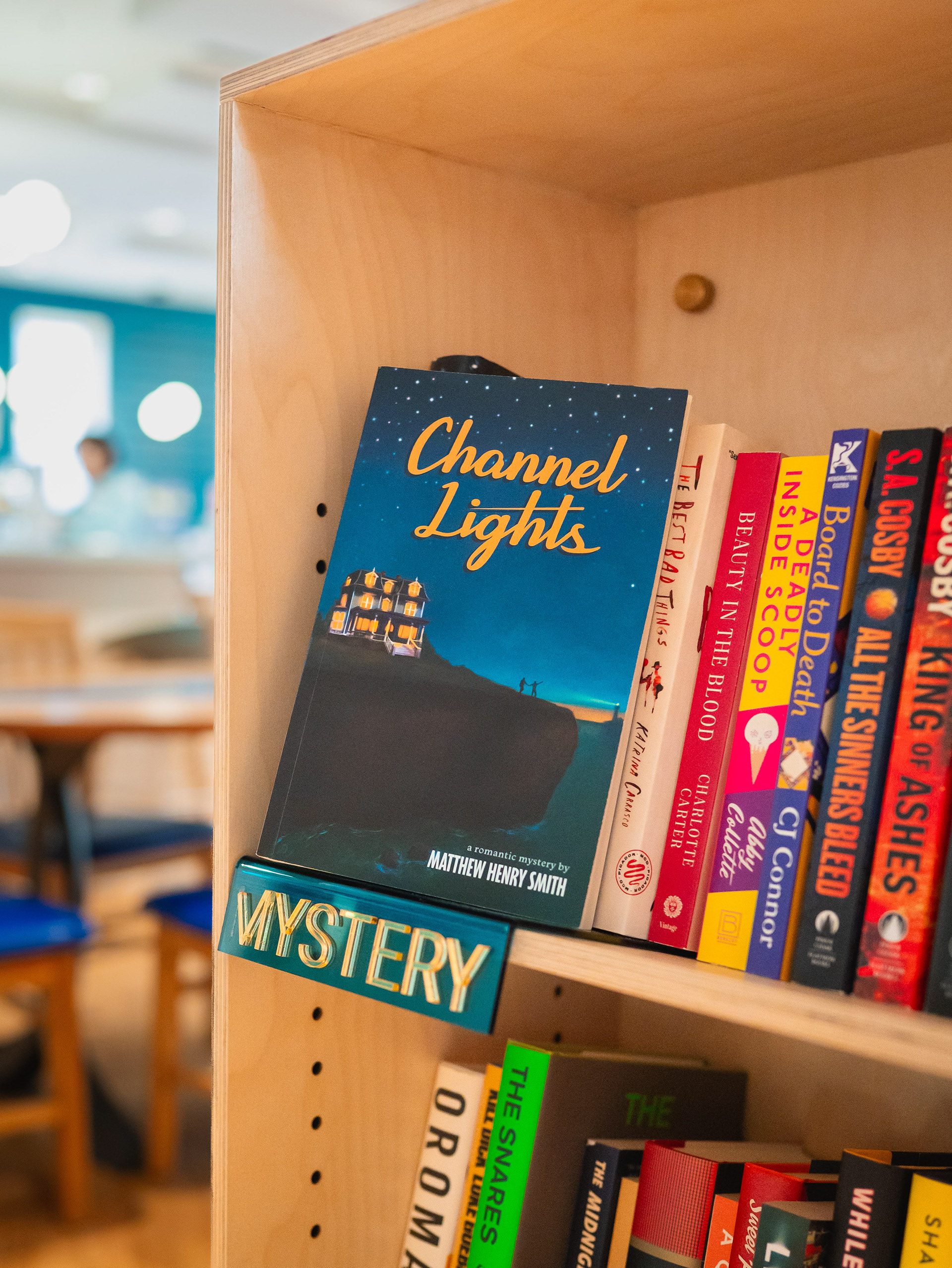
After several weeks of being live with Amazon sales, I started to send author copies to local bookstores asking if they felt the work had any commercial merit. Out of 15 bookstores, one responded to say the book could be sold on commission, which was thrilling! The book is now live in two bookstores on commission, which I see as great marketing at a low cost. 
I made sure my website, which had previously just been for my photography, prominently featured my book and information about where it could be purchased. 
In the first quarter or so of being live with my book, I’ve sold over 125 through various channels. Sales are slowing since the launch, but tend to pick up whenever I have the time to post new content on Instagram. I’ve tried to keep the content itself authentic to who I am as an author rather than chasing the trends I see in the book promotion sphere. My partner has also helped me hone my elevator pitch for the book since he’s heard me talk about the story the most. We’ve recently settled on “Heated Rivalry meets Murder She Wrote” which couldn’t be more perfect. 
I also recently got my first 4-star review, which in my mind helps to legitimize the book. All of the prior reviews had been 5 stars (from family and friends), so taking the average down to 4.8 stars makes the listing appear more like any other book you’d see in the marketplace. And it means people are taking it seriously enough to be honest, which is an honor.

Closing Thoughts
This is where things stand as of late June 2026. My book is in bookstores, professionally edited, honestly reviewed, and delighting audiences. I’m still searching for the kind of readers who love the book enough to evangelize it, but that will come in time. And because I chose independent publishing, I can pursue marketing the book and writing the sequel at my own pace. 
Throughout this process, I proved to myself that I could write a compelling story and have fun doing it. I also learned where to involve professionals to get the best possible outcome. I hope you found this guide helpful and that you start your own creative project very soon! 
Back to Top