Betting on Independence
As I worked with Steph on further revisions and Ren on the cover, I began querying agents. I used several tools for this including:
My query letter usually included details about the book, a vision for the target reader, and comparable works to demonstrate familiarity with the genres. I also included Ren’s cover designs to help agents visualize the book.
Here is an example of my boiler plate query letter, which I modified to match each agent's profile:
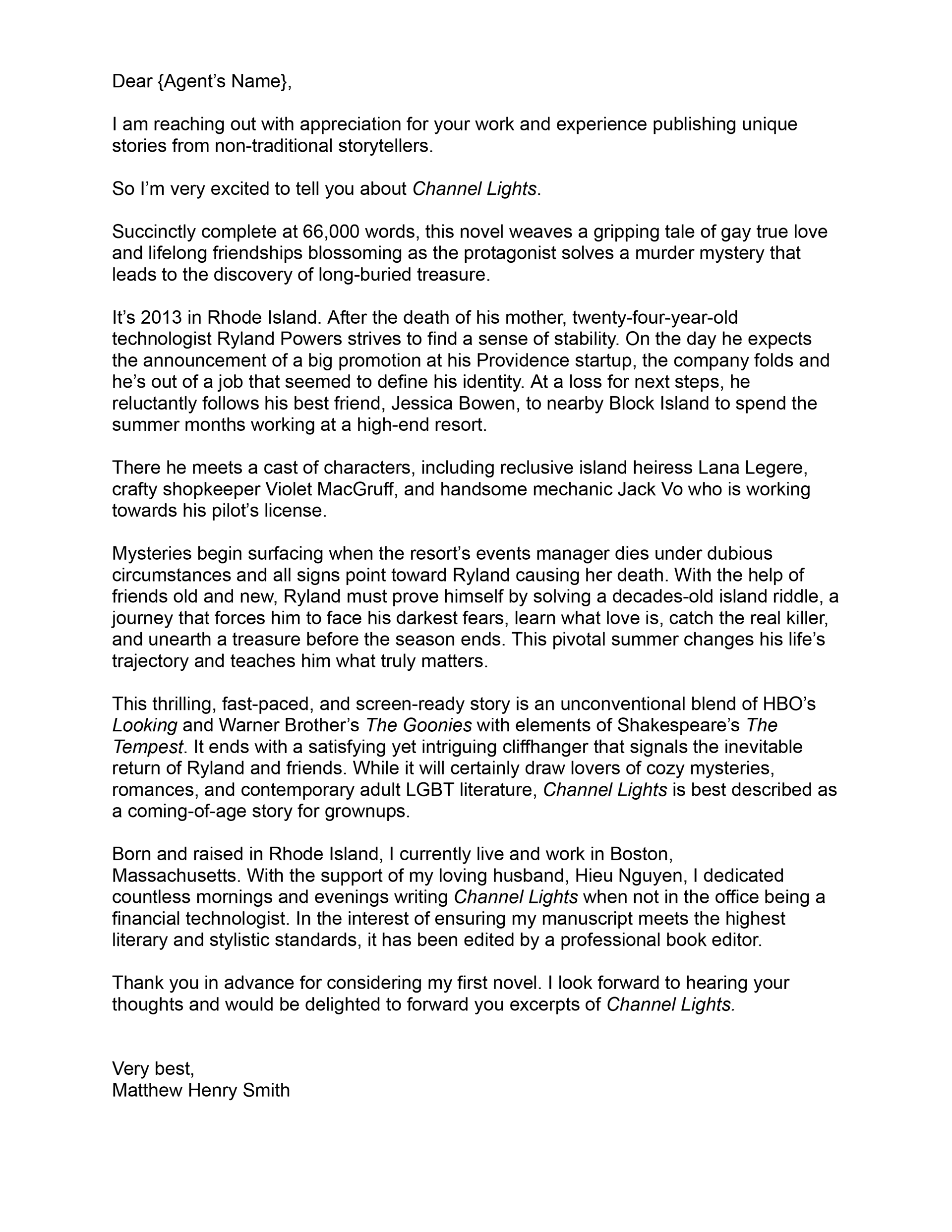
Agents are remarkably, perhaps unbelievably, specific. As an example, I recall coming across an agent who was only looking for non-violent murder mysteries. If the violence happens off-stage, does that still count as violence? These paralyzingly precise wish lists were likely reflectively of the kinds of manuscripts agents had previous success selling.
My rejection rate was 100%, which likely had less to do with the quality of the material and more to do with the agent not feeling confident in finding a buyer.
I spent several weeks querying, which most people will tell you is not nearly enough time. But in those weeks I started to realize that if I didn’t have the patience for finding an agent, I wouldn’t have the patience for the next step of taking that book out to publishers to sell.
I also visualized what it would look like if I found success. In the best case, an agent would find me a publisher to take my book to the marketplace. And that publisher would probably expect me to market the book full-time, which I simply can’t do with my full-time job. But through self-publishing, I could dial up or down the amount of time promoting the book based on my availability. Maintaining that control was ultimately the better fit for me, and so I started getting ready to move forward on my own.
Once I decided to stop querying, I knew I had to find a platform to independently publish. It would have been great to avoid the behemoth that is Amazon, but my research concluded it would be the best way to reach the widest initial audience, and that the quality of the printed books would be almost as good as those printed by traditional publishers.
So I opened my account with Kindle Direct Publishing (KDP), and began to gather the information needed to sell my book myself.
Formatting & Preparation
This is the part of the process where I found sequencing to be essential.
First, I couldn’t just submit the versions we had been working on, so I asked Steph if she would be willing to format the book for publication. The document had to be expertly formatted for print, with attention to spacing, pagination, gutters (where the page meets the spine) and more. Steph, as usual, did a fabulous job putting my book into the format required for KDP with this guide as our reference:
The only information Steph needed from me was whether I wanted a page bleed (I did not) and what the trim size, or final book size, would be. I took a measuring tape to a book store and measured books that felt good in my hands. I settled on a trim size of 5.5” x 5.8”.
Once Steph finalized the formatting, this gave us a new necessary piece of information: the final page count. I was then able to go back to Ren with the final trim size and page count, and use another Amazon calculator to determine the spine width so Ren could complete the remaining cover wrap elements.
In retrospect I should have picked my trim size earlier, because this would have helped Ren understand the book’s aspect ratio sooner.
With the manuscript and cover wrap finalized, I picked keywords for KDP to help optimize the book for results in an Amazon product search.
I also opted to submit my book for copyright registration with the United States Government (a painless but time-consuming process) and registered for ISBNs with Bowker. These ISBNs gave me a single identifier for each version of the book (print and e-book) to use if I ever choose to sell on other marketplaces, like IngramSpark.
Beyond this, I needed to choose a price, set up bank account information, and print a few proofs to make sure my book actually looked the way I wanted it to.
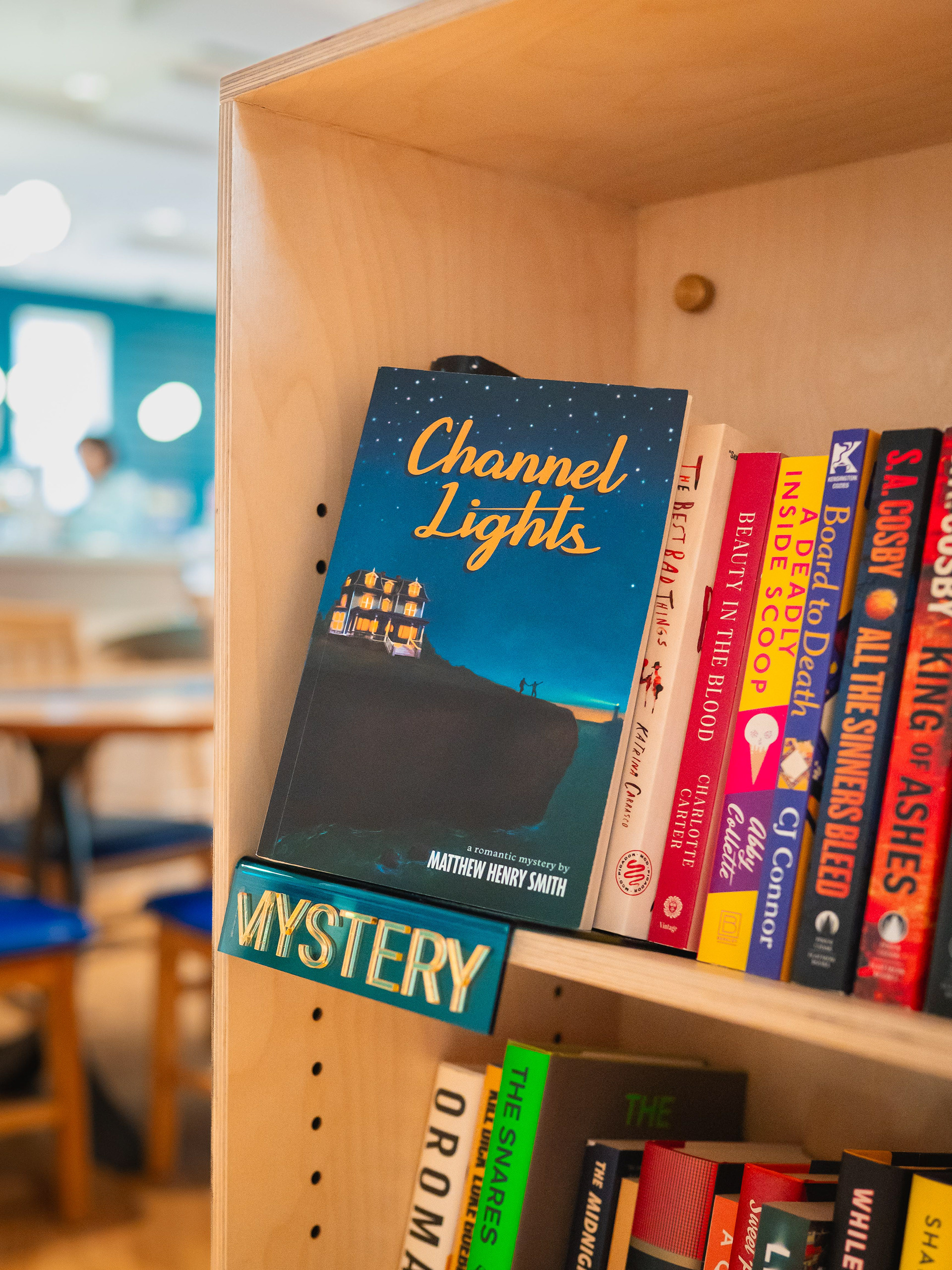
A photo of my book on the shelf at Just Book-ish in Boston.
Publication & Marketing
Publication day went smoothly. My book was in great shape thanks to all of the steps taken above. It felt like magic to see it available for purchase online. When I sent first-edition "thank you" copies to the pre-readers of my original drafts, their reactions were to almost universally exclaim, "it's real!"
However, marketing the book has been more challenging than writing it. For one thing, I’d sworn off social media prior to writing the book, so I had to create a new Instagram account for promotion. Building an audience from scratch takes time, so I probably should have started promoting the book during the drafting phase.
For another, it can feel uncomfortable posting about the book. I don’t want to spam my family and friends who are most of my followers. Also, it’s an amateur gay romance. While I think Channel Lights is well written and could be enjoyed by anyone, the natural audience for the story are probably the same people who loved Heated Rivalry: queer and left-leaning people, primarily women, ages 18-45.
This leads me to be a bit conservative with how often I post, but that’s something I’m trying to push through. Channel Lights deserves to find its audience, and that will only happen with consistent promotion.
After several weeks of being live with Amazon, I started to send author copies to local bookstores asking if they felt the work had any commercial merit. Out of 15 bookstores, one responded to say the book could be sold on commission, which was thrilling! The book is now live in two bookstores on commission, which I see as great marketing at a low cost.
I made sure my website, which had previously just been for my photography, prominently featured my book and information about where it could be purchased.
In the first quarter or so of being live with my book, I’ve sold over 125 copies through various channels. Sales are slowing since the launch, but tend to pick up whenever I have the time to post new content on Instagram. I’ve tried to keep the content itself authentic to who I am as an author rather than chasing the trends I see in the book promotion sphere. One tactic I have used is creating Spotify & Apple Music Playlists for the book that anyone can listen to, featuring the songs that appear throughout the story. My partner has also helped me hone my elevator pitch for the book since he’s heard me talk about the story the most often. We’ve recently settled on “Heated Rivalry meets Murder She Wrote” which couldn’t be more perfect.
I also recently got my first 4-star review, which in my mind helps to legitimize the book. All of the prior reviews had been 5 stars (from family and friends), so taking the average down to 4.8 stars makes the listing appear more like any other book you’d see in the marketplace. And it means people are taking it seriously enough to be honest, which is an honor.
Closing Thoughts
This is where things stand as of early July 2026. My book is in bookstores, professionally edited, honestly reviewed, and delighting audiences. I’m still searching for the kind of readers who love the book enough to evangelize it, but that will come in time. And because I chose independent publishing, I can pursue marketing the book and writing the sequel at my own pace.
Channel Lights is the story of a person learning he can change his life, form a new identity and be more than one thing. I've proven much the same things to myself by learning to write. I also learned where to involve professionals to get the best possible product outcome.
Below is an abbreviated list of 20 steps for writing and publishing. Since the whole exercise felt like putting together a live production you'll notice a theatrical theme. This guide is not provided as legal guidance or financial advice.
Abbreviated Writing & Publishing Guide
1. Set the stage. Spend dedicated, uninterrupted time meditating on the story setting.
2. Invite the players. As the sense of place takes shape, think about who might be there, why they might be important to each other, and who they will become.
3. Jump through wardrobes. Let life inspire, and build up from there. Say yes to everything. Insist on originality and resist Artificial Intelligence. Write down everything and then rewrite it.
4. Get it off the screen and onto the page. Print and read the first draft. Share with three close confidantes.
5. Revise and enhance. Tighten. Create multiple drafts, each with different pre-renders, and ask for specific feedback.
6. Finalize the cast list. Consolidate, delete, and anonymize extraneous characters.
7. Formalize the goals. Pursue traditional publication, or go independent? Why not try both?
8. Socialize Concepts. Start promoting, teasing possible content and ideas.
9. Choreograph the dance. Collaborate with a trusted editor.
10. Mock up the playbill. Collaborate with a trusted illustrator.
11. Seek a producer. Attempt to find an agent. Even going through this process helps create pitch content for the book, and learn about book market trends.
12. Become a producer. Decide to go independent. Initiate formatting finalization with the editor.
13. Order the costumes and build the set. Initiate cover wrap finalization with illustrator, complete with the final page count and measurements from editor.
14. Own the outcome. Apply for copyright registration.
15. Make it discoverable. Apply for ISBNs.
16. Select the theater. Onboard the book to the bookselling platform (Amazon KDP).
17. Dress rehearsal. Print proof copies.
18. Tech rehearsal. Make final adjustments
19. Opening night. Publish and send thank you copies to pre-readers.
20. Campaign for a Tony. Continue marketing and promoting the book.
I hope you find this guide helpful. May it inspire you to build your own project plan and start writing very soon.
This guide is not provided as legal guidance or financial advice.